Tiny Ants in the Kitchen? Why Sprays Make Pharaoh Ants Worse (and What Works)
You spray the trail, and a week later there are ants in three rooms. Meet the Pharaoh ant — and learn why the right bait, not a spray, is the answer.
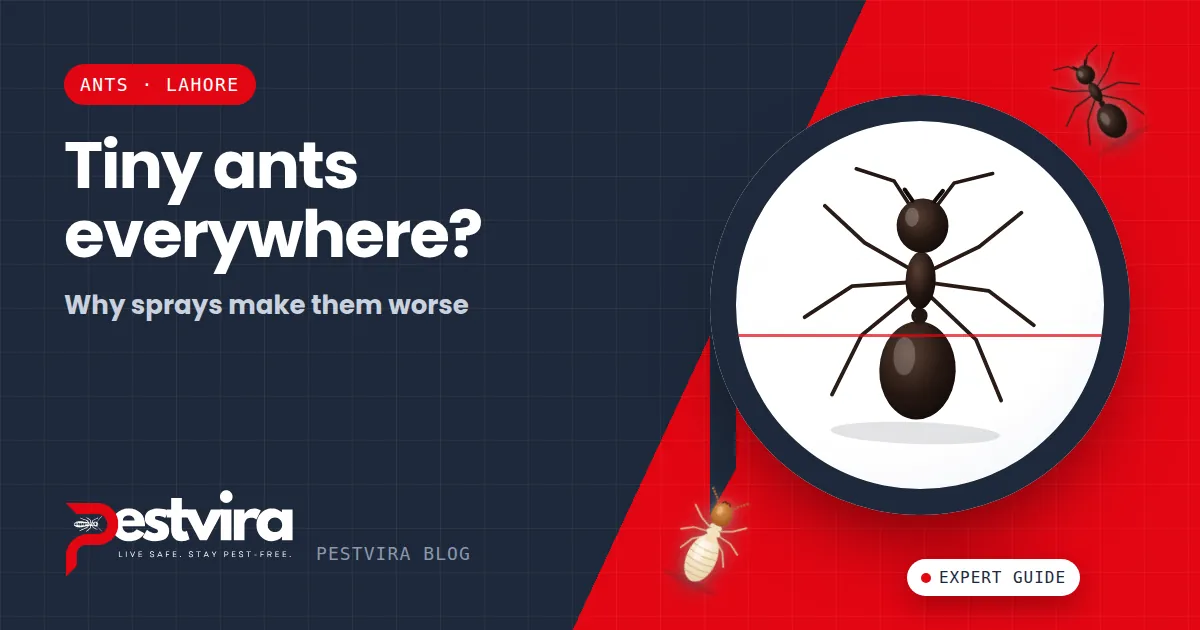
They're tiny — about 2 mm — yellowish, and they seem to appear from nowhere: along the kitchen counter, in the sugar jar, around the bathroom sink, even inside electrical sockets. Many Lahore apartment residents spray the trail, the ants vanish, and a week later they're back in more rooms than before.
If that sounds familiar, you are probably dealing with Pharaoh ants (Monomorium pharaonis), one of the most frustrating indoor ants in the world — and one that reacts badly to sprays.
How to recognise Pharaoh ants
Other common ants in Lahore include larger black crazy ants (fast, erratic, long legs), carpenter ants (large, black, near damp wood) and fire ants (reddish, painful sting, in lawns). Each needs a different approach, which is why identification comes first.
Why sprays make Pharaoh ants worse
Pharaoh ant colonies have many queens. When a colony is stressed — for example, by a repellent spray — groups of workers carry brood and queens away to form new colonies in other places. This is called budding. So the spray kills the ants you see but splits one colony into several, spreading them through walls and into new rooms or neighbouring flats.
- Kills only the foragers you see
- Colony splits and spreads (budding)
- Ants appear in new rooms
- Repellent smell disrupts bait
- Workers carry bait back to queens and brood
- Whole colony declines over 1–2 weeks
- Activity drops across the home
- Non-repellent, targeted placement
What works: slow-acting baits
The goal is to let foraging workers do the work. Slow-acting baits are designed so that workers survive long enough to carry the bait home and share it with the queens and larvae.
- 1IdentifyConfirm species and map trails in every room
- 2BaitPlace small amounts of suitable gel or granular bait along trails
- 3Don't disturbNo sprays, cleaners or chalk on the bait trail
- 4CheckReview after 7–14 days, re-bait where ants still feed
- 5SealClose key entry points once activity stops
What you can do today
- Stop spraying the trails and avoid strong cleaners directly on them while baiting.
- Remove competing food: wipe sugar and grease spills, store sweets and honey in airtight jars, rinse food containers before binning.
- Fix leaks: Pharaoh ants also need water — dripping taps and wet sink cabinets help them.
- Don't cut off the trail too early — let the ants find the bait.
When to call a professional
If ants are in several rooms, keep returning after treatment, or you live in an apartment building where they travel between flats, a professional programme is the fastest route. In buildings, treating multiple units together is far more effective than treating one flat.
PestVira provides ant control in Lahore with species identification and colony-targeted baiting. Also read our summer guide to ant-free Lahore homes and gardens or call +92 309 1777759.